
The Long Night of Sciences
JUN 2026
06
Berlin, Germany

The Long Night of Sciences (LNDW) will take place on Saturday, June 06, 2026. From 5 p.m. to noon., scientific and science-related institutions in Berlin invite visitors to take a look behind the scenes and experience science and research first-hand.
The Fraunhofer Heinrich Hertz Institute (HHI) is taking part in LNDW 2026. Visitors will gain insights into our current research from 5 p.m. to 10 p.m..
Tickets are available on the official LNDW website.
Contact
Marc Reznicek
Head of Showrooms & Events
Project Manager – Forum Digital Technologies
Phone +49 30 31002-412
Light on a chip: photonics for medicine and the quantum world
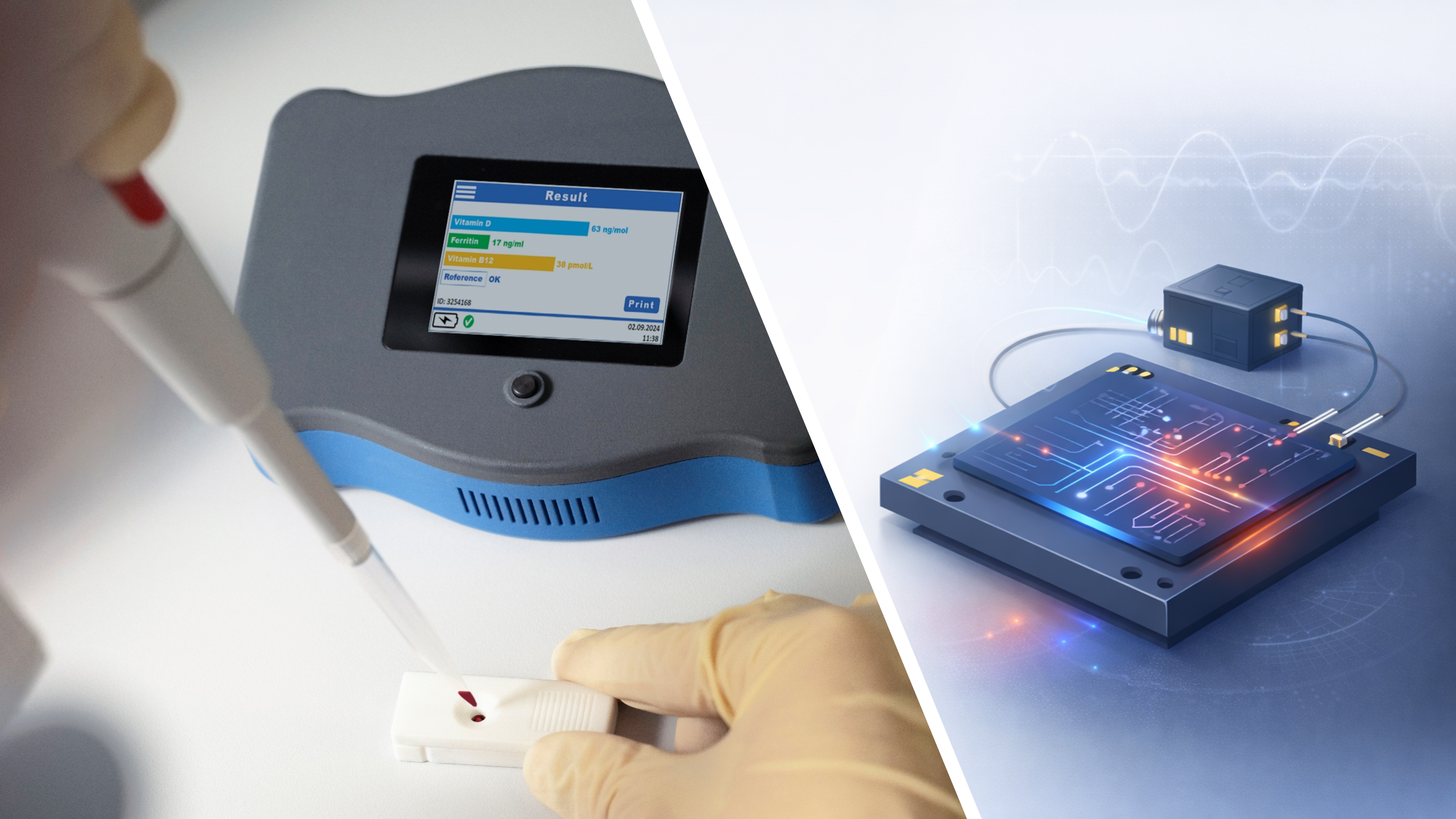
We present a novel rapid test that works with light. Similar to a COVID rapid test, it delivers results within minutes, but with significantly higher accuracy. This will make medical testing faster and more cost-effective in the future. You can also take a look at a quantum chip under the microscope. This tiny high-tech component shows the cutting-edge technology being developed here in the fields of healthcare and quantum technology.
Biomedical Compression: Making the flood of data from fitness trackers manageable
We demonstrate live how heart rate data is recorded, heavily compressed, transmitted, and immediately displayed again—all in real time. This reduces the data volume by a factor of 10 without losing any information needed for analysis. This makes health data from wearables and medical sensors practical on a large scale: less network load, lower energy consumption, and higher availability lead to more robust and resilient telemedicine and monitoring applications, even with many simultaneous users.
Gaussian Splatting for photorealistic web-based 3D and avatars
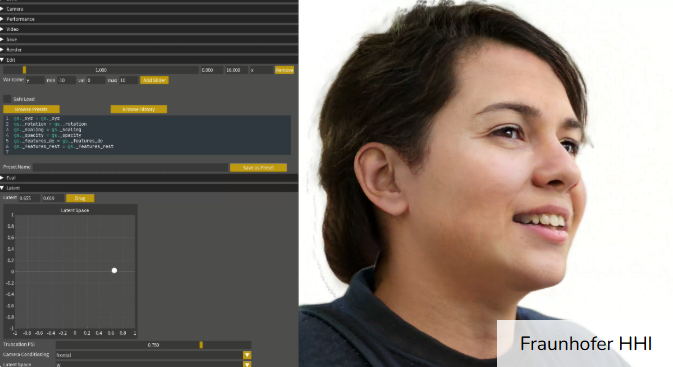
Photorealistic 3D models can now be created from ordinary photos, allowing them to be explored freely from any angle, thanks to a new technique called 3D Gaussian Splatting. We show how we compress this data efficiently so that everything runs smoothly in a standard web browser, without the need for special software. We also demonstrate how realistic 3D heads can be generated using this approach, a building block for digital twins and new forms of communication.
Fiber optics over and back

Fiber optic internet you can touch: How does the light get into the optical fiber and where does it go? Explore the simplest elements of the Internet of the future and try your hand at tasks that present engineers with everyday challenges.
Poinsnaké

The polarization state of light is shown in the Poincaré sphere. Move around this Poincaré sphere in a playful and almost child's play way, just like in the classic game Snake, and get a feel for laboratory work in the field of optical communications engineering.
The robot at the bedside: real-time healthcare with 6G

Robots and modern mobile networks (5G/6G) will transform healthcare. Robotic arms automatically monitor patients, measuring blood pressure, pulse, and other vital signs, either directly on site or remotely controlled by doctors at another location. They can reliably recognize individuals and operate safely. From the measurement data, a digital representation of the patient is created in real time. This allows specialists to assess a patient’s condition remotely. In the future, this technology could help relieve clinical staff and enable high-quality healthcare even in rural areas.
EAV-Infra: Rethinking Noise Control Planning

How loud will a new road or rail line really be? Using audiovisual VR simulations, the noise impacts of infrastructure projects can be realistically experienced as early as the planning phase. To achieve this, vehicle noise is digitized using innovative microphone array measurements and simulated within a precise 3D environmental model. This creates an authentic spatial auditory impression that makes noise protection planning easier to understand and experience.
Quantum Key Distribution for highly secure data transmission

With our QKD system, critical communication (public administration, police, energy, healthcare data) can be secured against cyberattacks in the long term, including future threats from quantum computers. We present a high-performance, network-compatible QKD system “made in Berlin”, covering the entire value chain from the photonic chip to the complete system. This contributes to digital sovereignty and resilience.
Acoustic camera
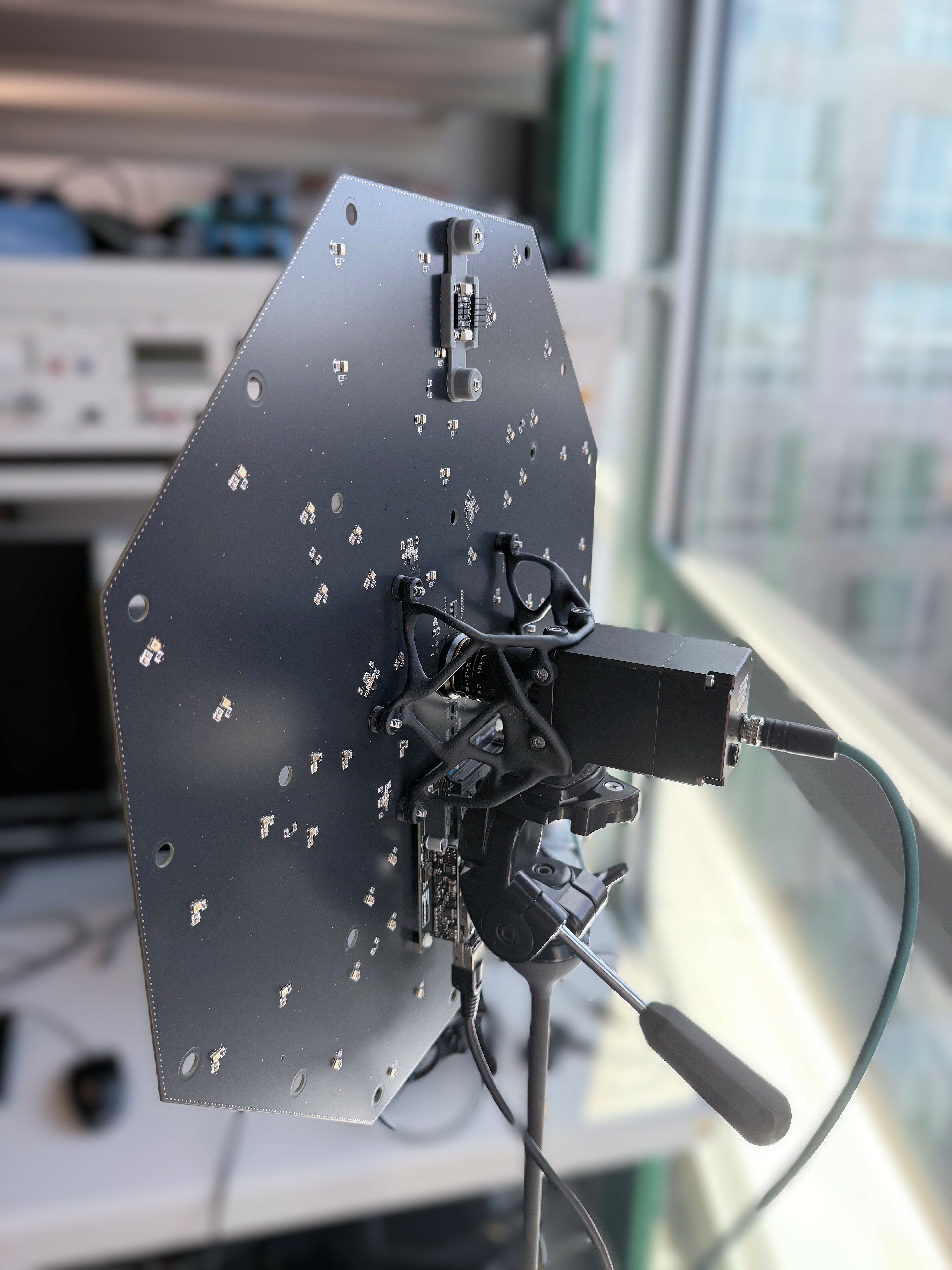
The acoustic camera makes sound visible: 64 networked microphones capture sounds and determine their position in space. A network camera simultaneously provides the corresponding live image. By combining both data sets, a visual sound map is generated in real time, showing where voices, noises, or machine sounds are coming from.
SemanticLens – Understanding and controlling AI

Large AI models like ChatGPT consist of millions of components – but what does each individual one actually do? With SemanticLens, we create a kind of “map” of these components: we organize them, describe their function, and make them searchable. This allows us to test in a targeted way: what happens if we strengthen or weaken specific parts? The goal: AI systems that we can truly examine and understand – for greater safety and trust when AI is used in public administration, schools, or hospitals.
XAI—How Does AI Make Decisions?
Explainable AI: How does an AI model arrive at a decision? In this demo, we look inside artificial neural networks and examine the functions of individual, relevant components. In doing so, we understand the criteria the AI uses to make a decision.
Large 3D worlds, small files
Today, realistic 3D scenes can be computed from photos and rendered in real time. However, these 3D Gaussian splatting data sets are often several gigabytes in size. We are developing methods to compress this data, reducing gigabytes to just a few megabytes. This allows 3D content to be displayed directly in a browser or on a smartphone, but also to be used efficiently for industrial applications, such as digital twins, planning, or virtual inspection.
Instrument Recognition
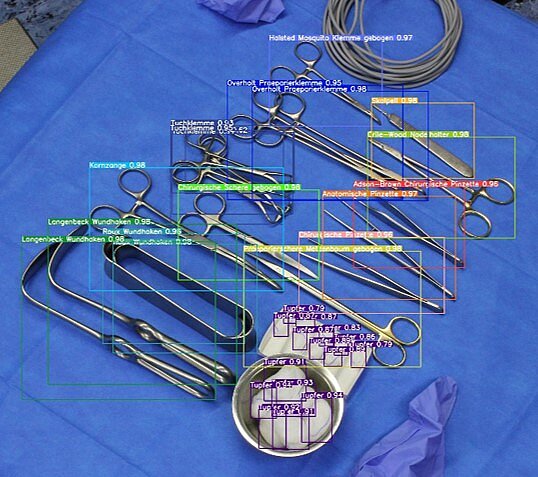
This demonstrator visualizes tasks that would otherwise require significant manual effort in the operating room: surgical instruments, swabs, and compresses are detected and counted in real time at the instrument table. This supports workflows, simplifies counting processes, and makes it easier to track important events during an operation.
Medical Laboratory

We would like to introduce you to our state-of-the-art medical laboratory. It uses image-based medical systems that provide support during operations. We will also show you the systems we use to implement AI-based surgical planning and analysis.