

Comparison of Sub-THz Radio Channel Characteristics at 158 GHz and 300 GHz in a Shopping Mall Scenario
This paper compares the sub-THz radio channel characteristics at 158 GHz and 300 GHz in a shopping mall scenario by extracting three different path loss models and various channel parameters.
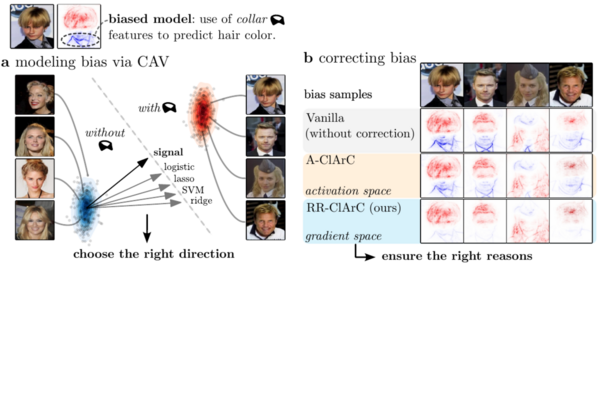
From Hope to Safety: Unlearning Biases of Deep Models via Gradient Penalization in Latent Space
We present a novel method ensuring the right reasons on the concept level by reducing the model's sensitivity towards biases through the gradient. When modeling biases via Concept Activation Vectors, we highlight the importance of choosing robust...
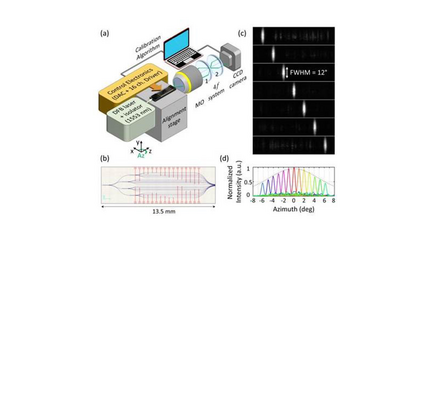
Sparse Aperiodic Optical Phased Arrays on Polymer Integration Platform
Solid-state optical beam-steering utilizing polymer waveguides as edge emitters to form optical phased arrays (OPAs) with aperiodic spacing for operation at 1550 nm is demonstrated for the first time. Power consumption of 1.28 mW/? per channel is...
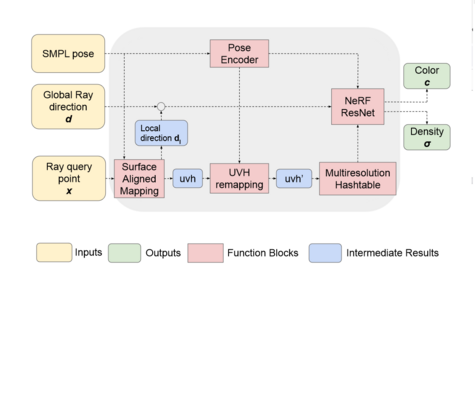
Animating NeRFs from Texture Space: A Framework for Pose-Dependent Rendering of Human Performances
We introduce a novel NeRF-based framework for pose-dependent rendering of human performances where the radiance field is warped around an SMPL body mesh, thereby creating a new surface-aligned representation. Our representation can be animated...
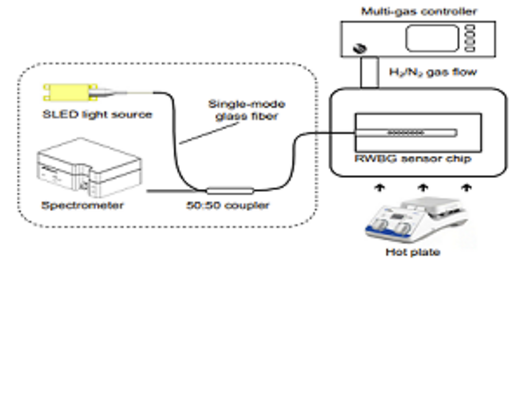
Polymer Waveguide Sensor Based on Evanescent Bragg Grating for Lab-on-a-Chip Applications
This work integrates an evanescent Bragg grating sensor into a polymer waveguide with microchannels. The sensor, built with epoxide-based polymers, is characterized through chemical applications. Temperature sensitivity is demonstrated (-47.75...
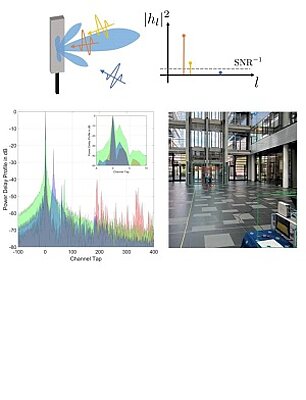
Little or No Equalization is Needed in Energy-Efficient Sub-THz Mobile Access
We validate experimentally the claim that, in sub-THz mobile access networks, single-carrier or low-number-of-subcarriers modulations are very attractive competitors to the dramatically more complex and energy-inefficient traditional...
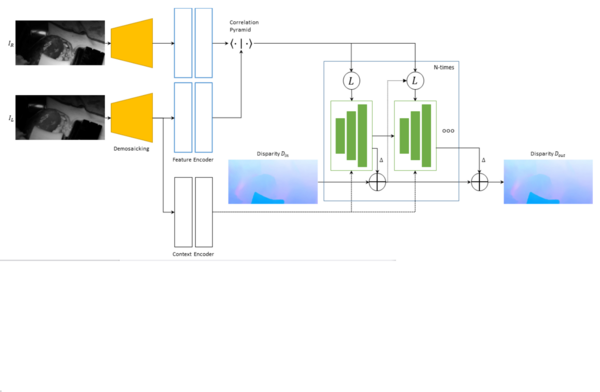
Multispectral Stereo-Image Fusion for 3D Hyperspectral Scene Reconstruction
We present a novel approach combining two calibrated multispectral real-time capable snapshot cameras, covering different spectral ranges, into a stereo-system. Therefore, a hyperspectral data-cube can be continuously captured. The combined use...
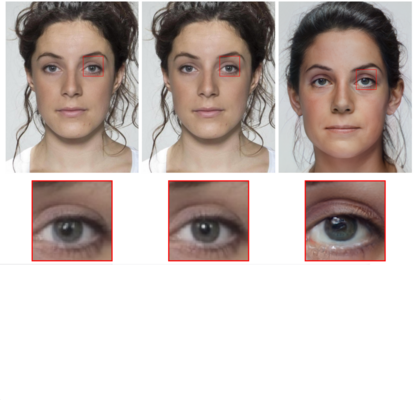
Towards Better Morphed Face Images Without Ghosting Artifacts
We propose a method for automatic prevention of ghosting artifacts based on a pixel-wise alignment during morph generation. We evaluate our proposed method on state-of-the-art detectors and show that our morphs are harder to detect, particularly,...
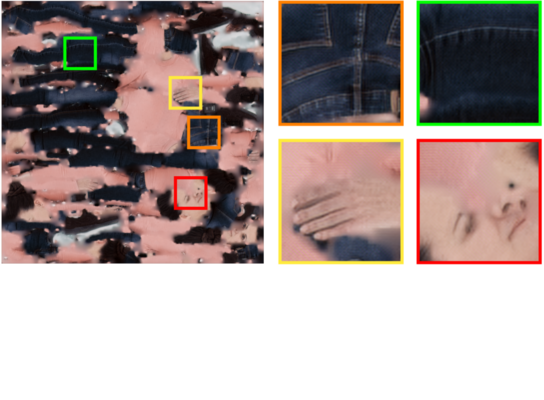
Generative Texture Super-Resolution via Differential Rendering
We propose a generative deep learning network for texture map super-resolution using a differentiable renderer and calibrated reference images. Combining a super-resolution generative adversarial network (GAN) with differentiable rendering, we...
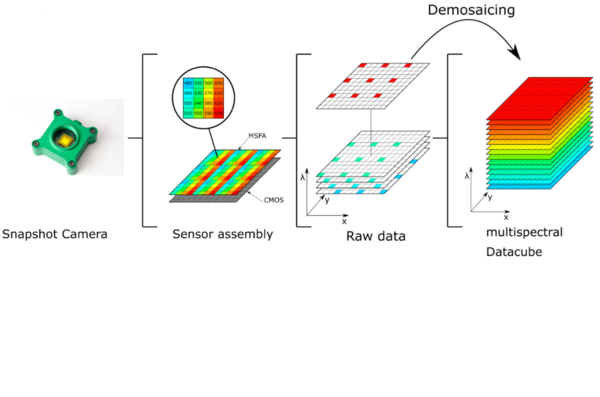
Efficient and Accurate Hyperspectral Image Demosaicing with Neural Network Architectures
This study investigates the effectiveness of neural network architectures in hyperspectral image demosaicing. We introduce a range of network models and modifications, and compare them with classical interpolation methods and existing reference...