
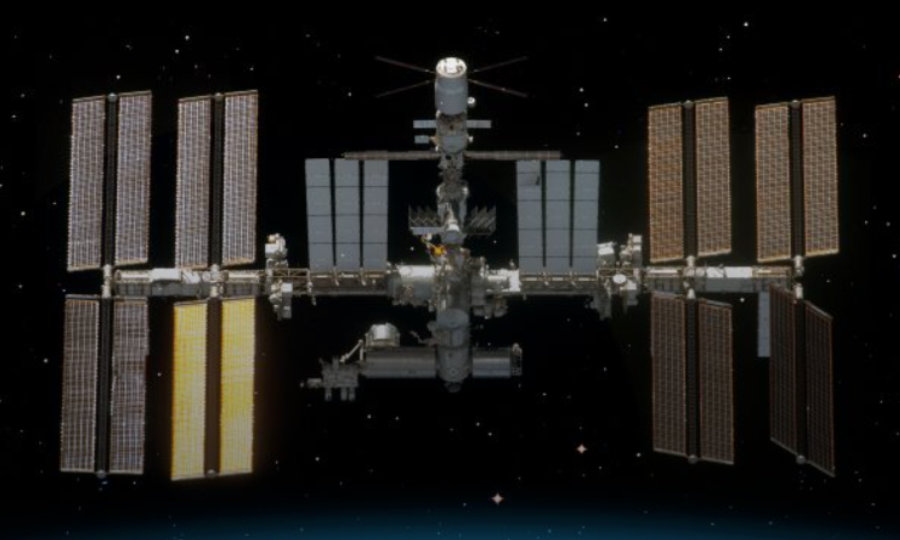
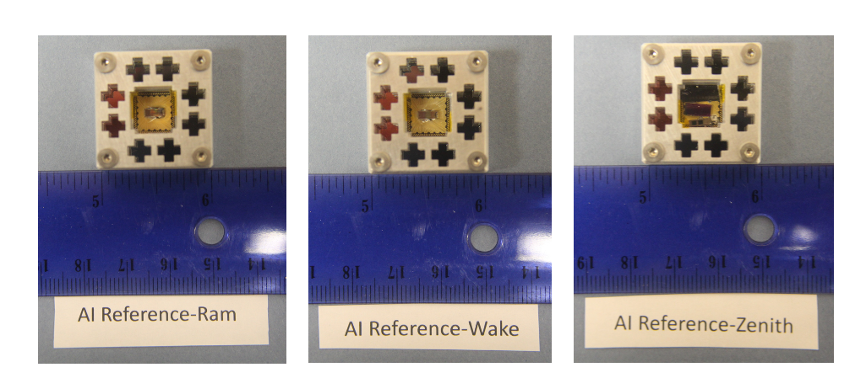
As part of NASA’s AI Chips to Space mission, photonic AI chips developed by the University of Florida (UF) in collaboration with NASA, the Massachusetts Institute of Technology (MIT), Vanguard Automation, and the Fraunhofer Heinrich Hertz Institute (HHI) are being tested on the International Space Station (ISS). The mission explores how photonic semiconductor technologies withstand the extreme conditions of space, paving the way for AI hardware suitable for space applications.
Photonics Research Under Space Conditions
The chips are part of NASA’s Materials International Space Station Experiment (MISSE-21) program, which tests materials and electronic components in orbit over several months. The goal is to analyze how radiation, atomic oxygen, and extreme temperature fluctuations affect photonic systems. The results are expected to provide critical insights for developing radiation-resistant, high-performance computing and communication systems for future satellites or autonomous spacecraft.
Fraunhofer HHI is supplying the indium phosphide (InP)-based laser dies for the mission, which serve as the central light source in the photonic chips. These components, developed and manufactured by the Photonic Laser Group (LAS) at Fraunhofer HHI, generate infrared light that is coupled into the photonic chips, making them essential for optical signal processing within the integrated photonic circuits. InP laser dies are thus a key technology for the next generation of photonic communication and computing systems.
International Cooperation
The photonic AI chips bring together the expertise of multiple international partners. Silicon platforms are supplied by AIM Photonics, while optical interconnections are realized using Photonic Wire Bonds (PWB) from Vanguard Automation. The University of Florida coordinated the project and implemented the design and module integration together with MIT and the Nanoscale Research Facility (NRF). Fraunhofer HHI’s InP laser dies complete the system, forming the central light source within the photonic architecture.
The chips will remain in space for several months, with measurement results expected to be evaluated in 2027. The findings will provide insights into the reliability, aging, and performance of photonic systems under space conditions, establishing a new foundation for research and development in space photonics.
For more information about the mission, see the University of Florida press release.